The Earth Observatory has published its last Image of the Day on this website. Please join us on our new home at science.nasa.gov/earth/earth-observatory.


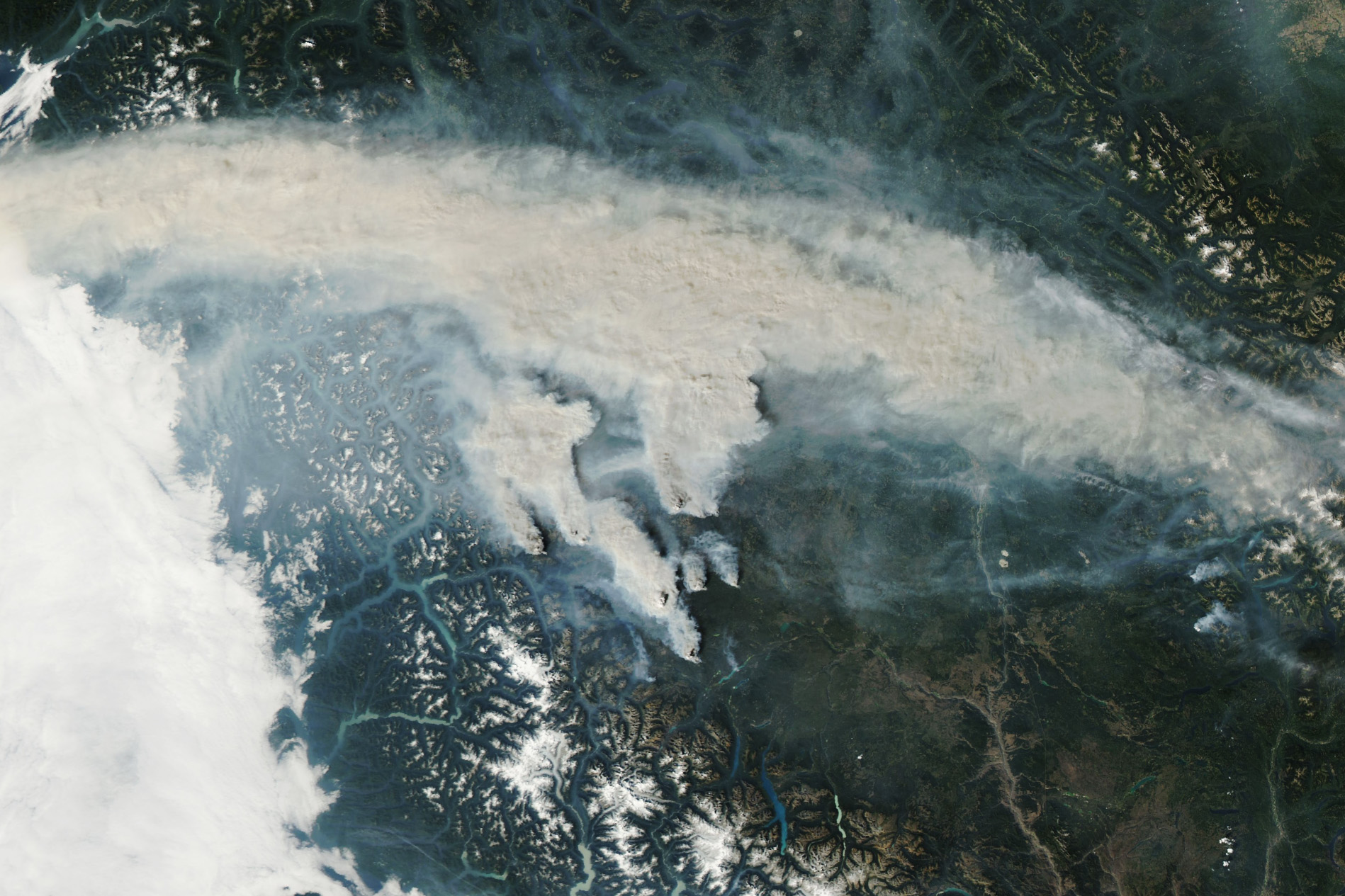
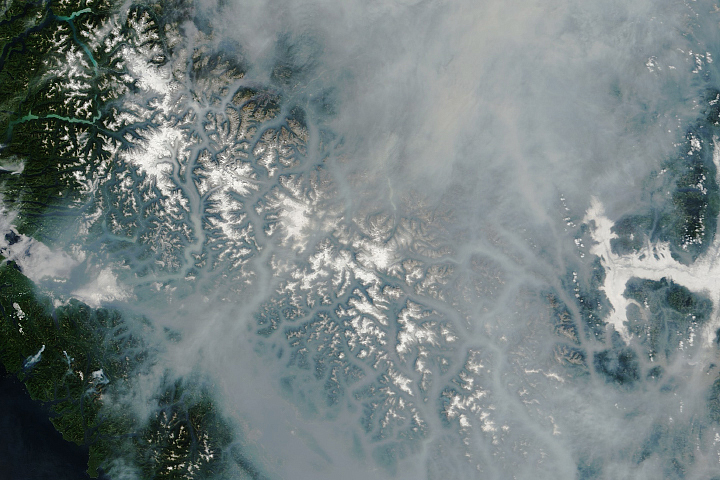
In early September 2025, warm and dry conditions gripped much of western Canada, setting the stage for wildland fires. Then the thunderstorms arrived. In the first week of the month, several large fires burned out of control in British Columbia, likely ignited by lightning.
On the afternoon of September 2, 2025, the MODIS (Moderate Resolution Imaging Spectroradiometer) on NASA’s Aqua satellite captured this image of smoke pouring from wildfires in the Cariboo region. Most were burning within the western part of this region, which spans 8.2 million hectares (20 million acres) of British Columbia’s central interior.
The Itcha Lake fire, toward the top-right of the cluster of fires shown above, was among the region’s largest, having burned around 17,000 hectares as of September 3. The Beef Trail Creek and Dusty Lake fires also spanned a substantial area, having burned around 7,800 and 2,800 hectares, respectively. The Ulkatcho First Nation and Cariboo Regional District issued an evacuation order for people in the vicinity of the Beef Trail Creek fire.
According to an August 27 report from the Canadian Wildland Fire Information System, British Columbia has seen 732,000 hectares burned so far this year, which is slightly higher than the 10-year average. In contrast, the burned area has soared above the 10-year average in Saskatchewan and Manitoba, which so far have seen around 2.9 million and 2.1 million hectares burned, respectively. According to news reports, the nation is experiencing one of its worst fire seasons on record, trailing only 2023 in terms of area burned.
NASA Earth Observatory image by Wanmei Liang, using MODIS data from NASA EOSDIS LANCE and GIBS/Worldview. Story by Kathryn Hansen.